
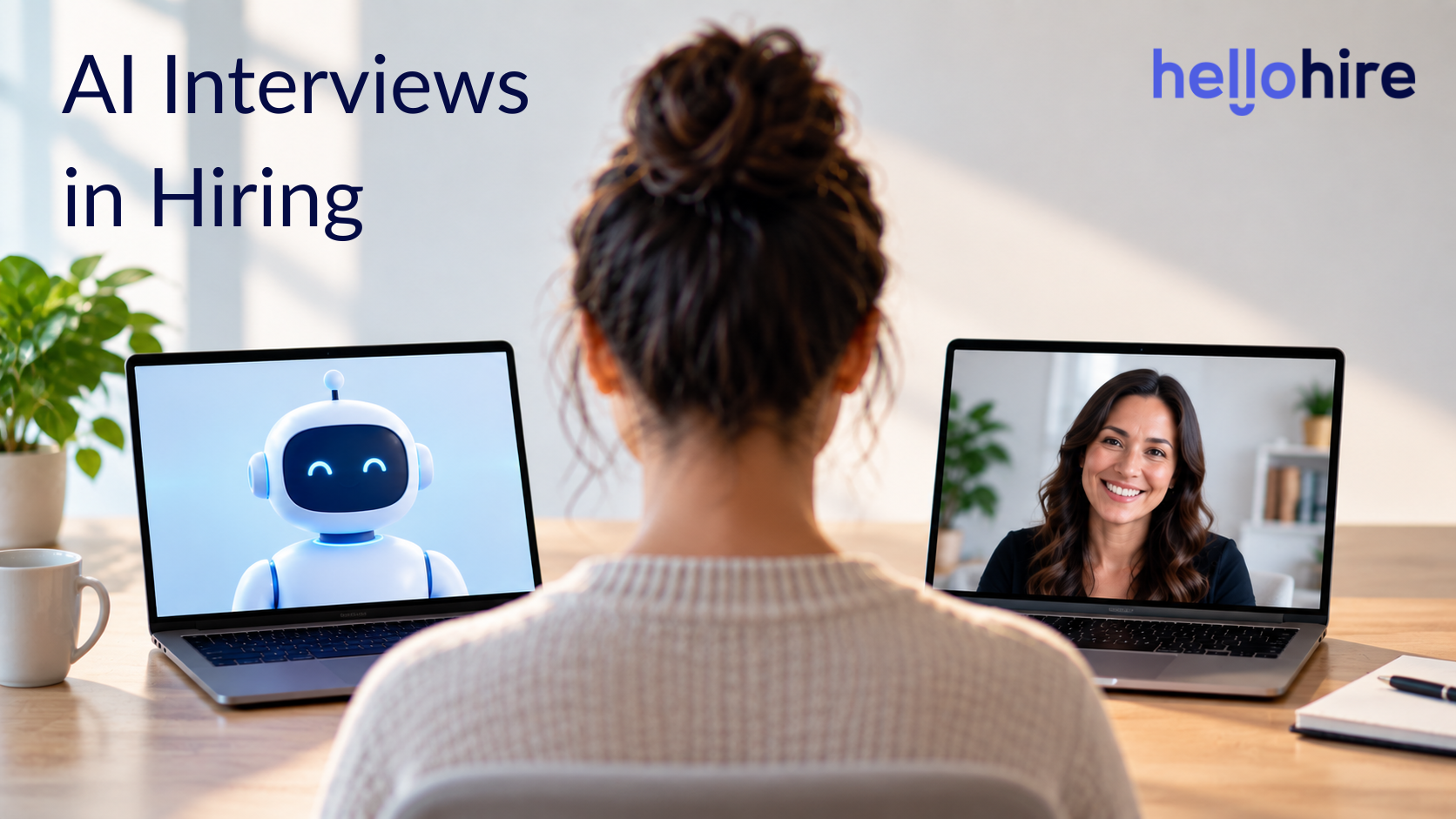
AI interviews in hiring are quickly becoming mainstream.
According to the 2026 Greenhouse Candidate AI Interview Report, 63% of U.S. job seekers have already experienced an AI interview – up 13 percentage points in just six months.
It’s easy to understand why employers are adopting them. AI interviewers can be available 24/7, eliminate scheduling delays and allow recruiting teams to speak with far more applicants.
But as AI becomes more capable, employers should be asking another question:
Where should AI replace human interaction – and where does the human connection still matter?
Candidates still want humans involved in hiring
Candidates aren’t necessarily rejecting AI.
They’re pushing back when hiring becomes too automated or impersonal.
Greenhouse found that 38% of U.S. candidates have already withdrawn from a hiring process because it included an AI interview, while another 12% said they would.
At the same time, only 19% said they wanted less AI involved in hiring overall.
That’s an important distinction.
Candidates appear open to AI when it’s transparent, useful and supported by human involvement. In fact, 46% of U.S. candidates surveyed by Greenhouse said they want the option to request a human interview instead.
The lesson isn’t that employers shouldn’t use AI.
It’s that candidates should still have access to people.
Human connection matters even more in home care
Hiring has always been a two-way decision.
The employer is evaluating the candidate, but the candidate is evaluating the employer too. An interview is often the first meaningful interaction between them.
In home care, that human connection is particularly important.
Caregivers enter people’s homes, build relationships with clients and families, earn their trust and provide deeply personal care.
Home care is a people business.
It seems counterintuitive to say that human connection is critical to the job while trying to remove it entirely from the hiring process.
Technology should make caregiver hiring more efficient.
But efficiency doesn’t have to mean removing people.
What we’re learning from AI interviews at Hellohire
We’re seeing this firsthand at Hellohire.
We’ve introduced AI phone screens as an additional option for caregivers when a live interview time doesn’t work for them.
A candidate who applies late at night or can’t find a convenient time on the recruiting team’s calendar doesn’t have to wait. They can choose to speak with AI on their own time.
But they can also choose to schedule a live interview with a person.
So far, when candidates are given that choice, most are still choosing the human interview – even when AI offers more flexibility.
It’s early, and we’ll continue measuring how that behaviour changes as candidates become more familiar with AI interviews.
But the initial signal reinforces something we’ve believed for a long time:
Candidates don’t necessarily want employers to remove people from hiring. They want employers to make people more accessible.
AI interviews can make human hiring faster
Using people doesn’t have to make hiring slow.
A caregiver shouldn’t wait until Monday morning for a response because they applied Saturday night.
A recruiter shouldn’t exchange six messages just to find an interview time.
And candidates shouldn’t fall through the cracks because someone forgot to follow up.
AI and automation can handle immediate outreach, screening, scheduling, reminders, follow-up and interview summaries.
And when no recruiter is available, an AI interview can give the candidate another way to keep moving.
The goal isn’t to automate every interaction.
It’s to eliminate the friction preventing the right candidate and the right employer from talking to each other.
Our philosophy is simple:
Human when possible. AI when helpful. Automation everywhere it removes friction.
Finding the right balance between AI and humans
AI interviews in hiring will continue to grow.
Greenhouse’s research suggests the bigger issue isn’t whether employers use AI. It’s how they use it. Candidates want transparency, human oversight and the ability to interact with a person when it matters.
That’s especially important in industries built around relationships.
Let AI respond at 2 a.m.
Let automation handle scheduling and follow-up.
Let an AI interviewer step in when a candidate wants to move forward and no recruiter is available.
But when a qualified candidate wants to talk to a person?
Let them talk to a person.
The biggest opportunity for AI in hiring may not be replacing human interaction.
It may be making human interaction happen faster, more often and when it matters most.
About Hellohire
Hellohire helps home care agencies meet and hire the right caregivers before their competitors do.
We use AI, automation and built-in live video interviews to eliminate friction from caregiver recruiting so qualified candidates can get in front of your team faster.
Because the best technology doesn’t remove the human connection from hiring. It makes that connection easier to create.