
Home Health Care News reported on August 25 that referrals in home-based care are moving away from relationships and toward proof, with health systems and payers steering patients to agencies that can show quality ratings, low hospitalization rates, broad payer coverage, and how quickly they accept a case. Every metric on that list describes the client side of the business.
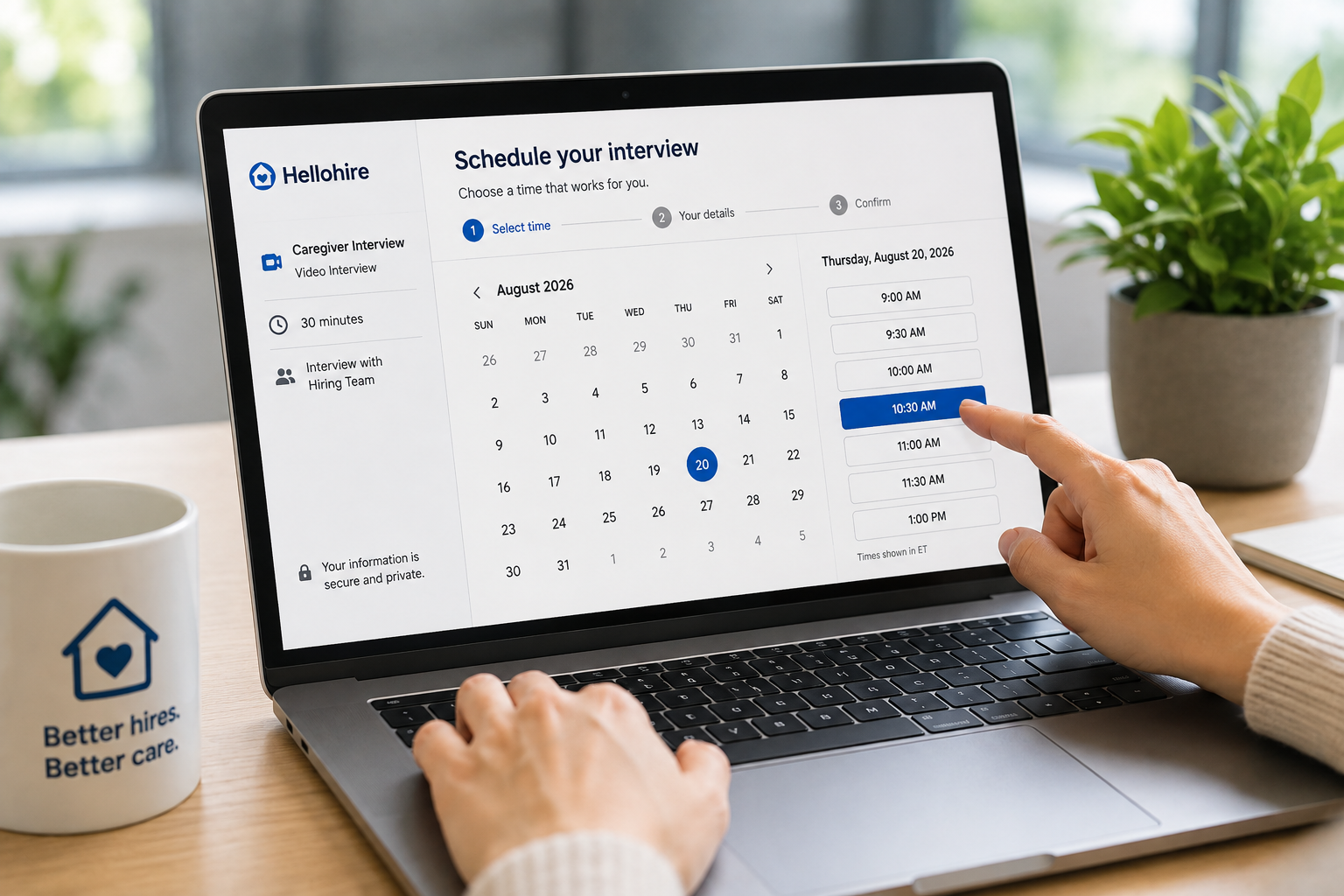
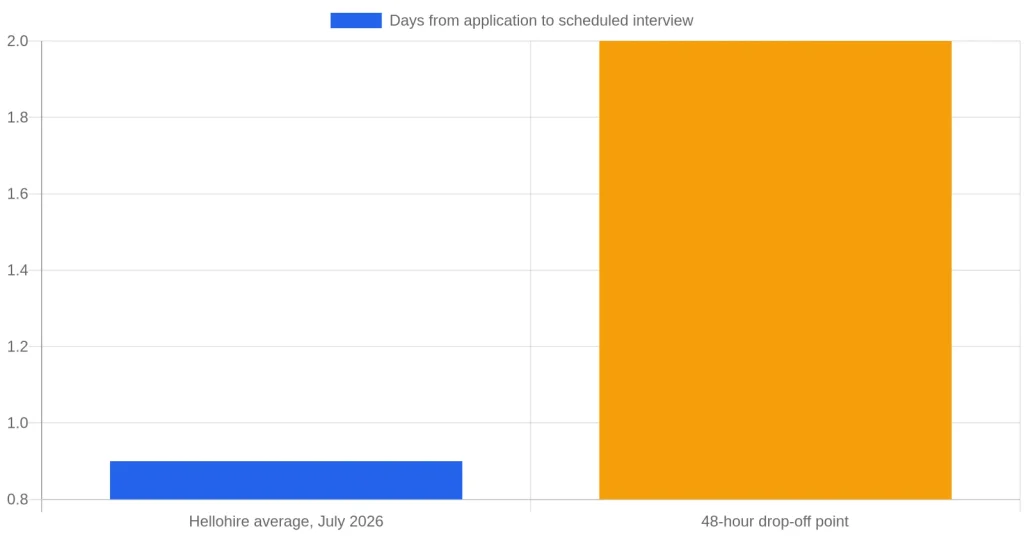
The home care hiring metrics most agencies skip sit between the application and the booked interview. In July 2026, agencies using Hellohire scheduled caregivers an average of 0.90 days after they applied, inside the 48-hour window where most candidates get picked up by someone else. Census and margin describe what already happened. Time from application to a scheduled interview tells you whether you’ll have caregivers to staff next quarter’s cases.
Why home care hiring metrics stop at census and margin
Agency dashboards get built by finance and operations people, and recruiting sits outside both. Census counts the clients you’re serving. Margin counts what you keep on each hour billed. Turnover counts who left. All three report a period that’s already closed.
Time from application to a booked interview moves before any of them. When it slips, census follows a couple of months later, and by then the meeting is about why growth stalled instead of about the applicants who never heard back.
How fast is fast enough?
Faster than 48 hours. In July 2026, agencies on Hellohire scheduled candidates an average of 0.90 days after they applied. The mechanics behind that number are in our piece on why waiting past 48 hours means the candidate is already booked elsewhere.
Under a day keeps someone warm. Past two days, you’re usually reaching a caregiver who already accepted another offer or stopped checking that inbox. That cost climbs when the pool shrinks, as it did when roughly 330,000 Haitian TPS holders lost work authorization.
What else belongs on the dashboard
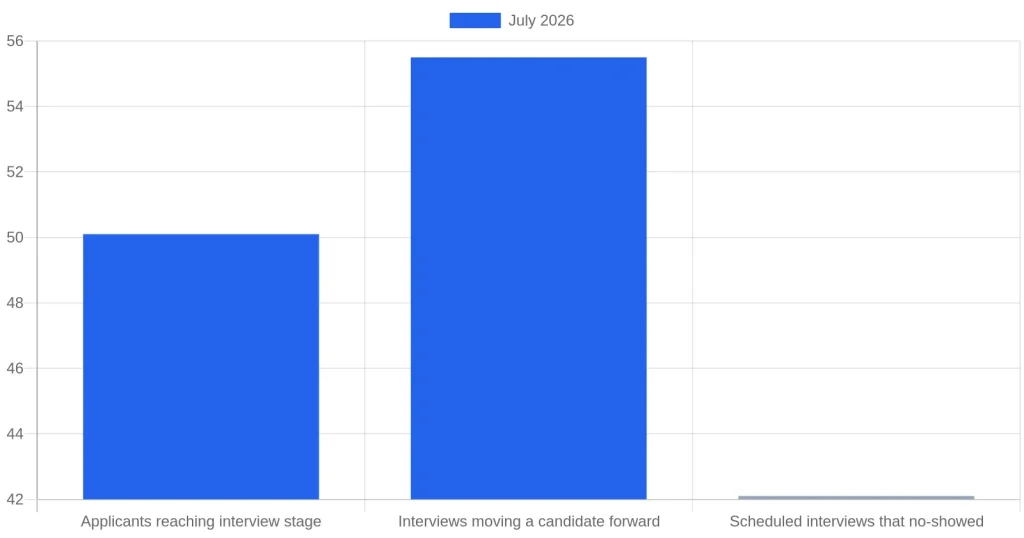
Time to schedule is the leading number. Three more from July 2026 tell you where the funnel leaks. 50.1% of applicants reached the interview stage, so just under half never got there, the inverse of that figure rather than a separate measurement. 42.1% of scheduled interviews ended in a no-show. 55.5% of interviews moved a candidate forward. Pull all four weekly, since a slow week shows up in census long before a quarterly review catches it.
| Metric | What it measures | When it tells you |
|---|---|---|
| Census | Clients on service right now | After the period closes |
| Margin | What you keep per hour billed | After the period closes |
| Caregiver turnover | Staff who left over a period | After the period closes |
| Application to scheduled interview | Time between a caregiver applying and holding a booked slot | The same week |
Put speed on the list
Agencies lose their time in two places. One is the gap between an application landing and somebody reaching out. The other is the back and forth of booking a slot over email.
Hellohire contacts every applicant by text and email within minutes of them applying, at any hour, screens them against your requirements automatically, and lets qualified candidates book their own time on your team’s live calendar. Interviews run on built-in video. For teams without the hours to run outreach and interviews daily, our Managed Recruiting Service puts Hellohire recruiters on live video interviews on your behalf, against the $50,000 or more a year an in-house recruiter costs.
Our July 2026 benchmarks, including the 42.1% interview no-show rate, show where the average agency lands. Book a demo with Hellohire to see where your’s does.